

 |
CCHU9030 Arts and HumanitiesImage, Space and SocietyThis course is under the thematic cluster(s) of:
|

Course Description
[This is a certified Communication-intensive (Ci) Course which meets all of the requirements endorsed by HKU’s Senate, including i) the teaching and assessment of written, visual and digital communication ‘literacies’; and ii) at least 40% of the course grade assigned to communication-rich assessment tasks.]
The course examines the relationship between the representation of space — through drawings, models, photography, film, virtual environments — and the economic, cultural, technological and political forces that shape society. Each of us has a personal relationship to architecture and the city as well as a felt understanding of space through our daily encounter with the built environment. It can therefore be exciting and useful to better understand how the world in which we live is planned, conceived and represented in order to take part in the shaping of that world.
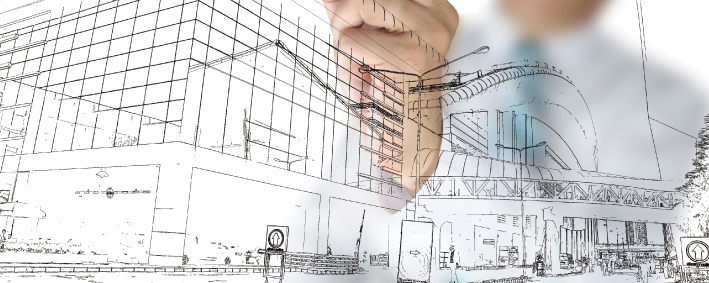
Architects and planners use drawings, models and other representations to consider, communicate and construct the spaces of our everyday lives. These forms of spatial representation have the capacity to do much more than lay out the foundations for buildings or cities. They are also mechanisms of provocation, discourse and critique. They make arguments, influence society and change the course of history. Students will consider the meanings behind various modes of spatial representation and the impacts of those visions.
Through weekly lectures, writing exercises, tutorial discussions and the making of photographic and filmic representations of Hong Kong, students will develop a capacity to engage with different forms of spatial representation and to articulate a personal understanding of their relationship to architecture and the city.
Course Learning Outcomes
On completing the course, students will be able to:
- Develop an understanding of the history of spatial architectural representation and describe the relationship of drawing and design to the built environment.
- Develop an understanding of the ways in which different forms of spatial representation (film, drawings, models, photography) are used to convey ideas about culture, politics and society.
- Develop an understanding of the ways in which technological shifts impact the ways in which the built environment is represented.
- Describe, analyze and interpret visual documents (i.e. drawings, photographs, diagrams) from the realm of the built environment in short extemporaneous in-class writing exercises.
- Create a photographic story-board of urban-space in Hong Kong that shows an awareness of the various strategies and techniques (framing, zoom, choice of subject, work in series, point of view, etc.) that have been developed through the history of photography.
- Create a short-film that uses strategies of film-making discussed in class to present a scene of urban life in Hong Kong.
- Apply writing skills developed over the semester to a take home essay that expands on ideas and points of view encountered over the semester.
Offer Semester and Day of Teaching
Second semester (Wed)
Study Load
| Activities | Number of hours |
| Lectures | 26 |
| Tutorials | 8 |
| Reading / Self-study | 15 |
| Assignment: Photo essay | 20 |
| Assessment: Film production | 20 |
| Assessment: Essay writing | 20 |
| Assessment: Reflective practice | 15 |
| Total: | 124 |
Assessment: 100% coursework
| Assessment Tasks | Weighting |
| Photo essay | 15 |
| Film production | 25 |
| Essay | 20 |
| Participation in lectures and tutorials | 20 |
| Reflective writing | 20 |
Required Reading
The required readings will be discussed in tutorials. Students should study the readings carefully, annotate on Perusall, and engage in seminar discussions.
Reading 1, Photography
- Barthes, R. (1980). Camera Lucida. [pp. 16-20]
- Redstone, E. (2014). Shooting Space, Architecture in Contemporary Photography.
- Wolf, M. (n. d.). Informal Seating Arrangements. From https://www.readingdesign.org/informal-arrangements
Reading 2, Film
- Eisenstein, S. M., & Bois, Y. -A., & Glenny, M. (1989). Montage and architecture. Assemblage 10. [pp. 116-121]
Reading 3, Drawing
- Zevi, B. (1957). The Representation of Space. Architecture as Space. How to look at Architecture. [pp. 45-53]
Reading 4, City
- Cook, P., Crompton D., Greene, D., Herron R., Chalk, W., & Webb, M. (2025). Archigram: The Book.
Course Co-ordinator and Teacher(s)
| Course Co-ordinator | Contact |
| Mr H. Zhang Department of Architecture, Faculty of Architecture |
Email: haotianz@hku.hk |
| Teacher(s) | Contact |
| Mr H. Zhang Department of Architecture, Faculty of Architecture |
Email: haotianz@hku.hk |