

 |
CCAI9034 Artificial Intelligence
|

Course Description
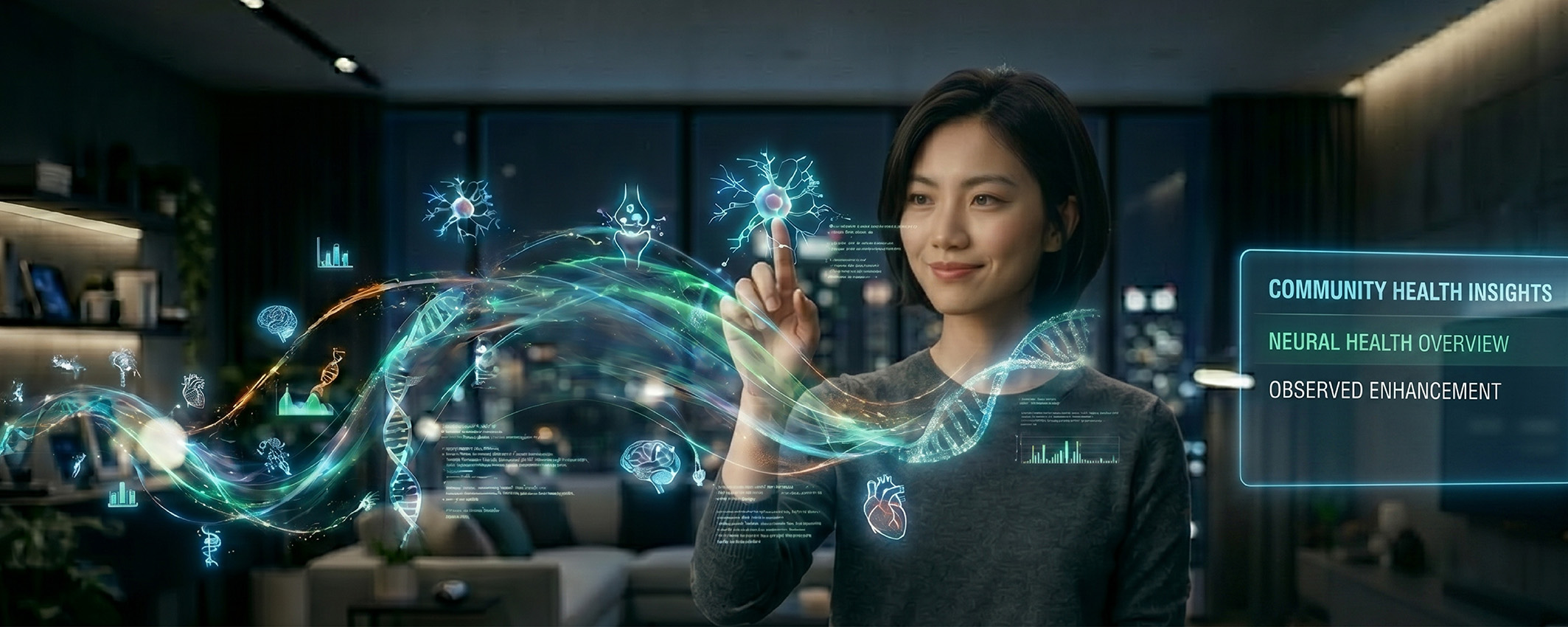
In an era of information abundance and AI-driven content, staying healthy depends on more than biology — it depends on how we find, evaluate, and share health information. This course positions you as a “Digital Health Citizen”: active, critical, and ethical participants in today’s complex health information environment. It examines how messages, from AI-curated social media feeds to public health campaigns, shape personal choices, community wellbeing, and societal outcomes.
The curriculum begins by building individual capabilities in health literacy and the psychology of health behaviour, then expands to societal issues like AI-amplified misinformation, algorithmic bias, and health disparities. You will learn to analyse persuasive strategies, evaluate digital content, and understand how different audiences respond to health messages. You will build these skills through case studies of real health communication scenarios and hands-on exploration of emerging technologies such as generative AI and extended reality. By the end of the course, you will be a sharper consumer of health information, a more thoughtful communicator, and better equipped to spot bias, design messages that resonate, and contribute to public conversations about health.
Course Learning Outcomes
On completing the course, students will be able to:
- Apply key theories of health behaviour change to analyze and explain the effectiveness of health messages across different media channels, including those utilizing artificial intelligence.
- Evaluate health information in digital environments by applying principles of health literacy and evidence-based criteria to identify misinformation, with a focus on AI-generated and AI-amplified content.
- Design culturally appropriate health messages through strategic application of framing, narrative, and audience segmentation principles, while critically considering the opportunities and limitations of AI-assisted message creation.
- Analyze ethical challenges in health communication, including the perpetuation of stereotypes, health disparities, and the impact of emerging technologies such as AI (e.g., algorithmic bias and data privacy).
- Develop personal health decision-making skills and community-oriented communication strategies that demonstrate digital health citizenship in an era of AI-assisted communication.
Offer Semester and Day of Teaching
Second semester (Wed)
Study Load
| Activities | Number of hours |
| Lectures | 24 |
| Tutorials | 12 |
| Reading / Self-study | 24 |
| Assessment: Essay / Report writing | 15 |
| Assessment: Group project | 30 |
| Assessment: Presentation (incl preparation) | 15 |
| Assessment: In-class quiz | 2 |
| Total: | 122 |
Assessment: 100% coursework
| Assessment Tasks | Weighting |
| Group project | 40 |
| Case analysis | 20 |
| In-class quizzes | 20 |
| Weekly study questions | 10 |
| Tutorial participation | 10 |
Required Reading
- Association of Health Care Journalists. (n.d.) Statement of principles of the association of health care journalists. From https://healthjournalism.org/about/principles-and-policies/statement-of-principles-of-the-association-of-health-care-journalists
- Franconeri, S. L., Padilla, L. M., Shah, P., Zacks, J. M., & Hullman, J. (2021). The science of visual data communication: What works. Psychological Science in the Public Interest, 22(3), 110-161. From https://doi.org/10.1177/15291006211051956
- Nan, X., Wang, Y., & Thier, K. (2021). The Routledge handbook of health communication. London: Routledge. [pp. 3332 “Health misinformation.”]
- National Cancer Institute. (2004). Making health communication programs work (The Pink Book). Bethesda, MD: U.S. Department of Health and Human Services, National Institutes of Health. From https://www.cancer.gov/publications/health-communication/pink-book.pdf
- Plechatá, A., Makransky, G., & Böhm, R. (2022). Can extended reality in the metaverse revolutionise health communication?, NPJ Digital Medicine, 5, 132. From https://doi.org/10.1038/s41746-022-00682-x
- Public Health Collaborative. (n.d.). Strategies for developing culturally driven public health communications. From https://publichealthcollaborative.org/communication-tools/strategies-for-developing-culturally-driven-public-healthcommunications/
- U.S. General Services Administration. (n.d.). Plain language guidelines. From https://digital.gov/guides/plain-language
- Weingott, S., & Parkinson, J. (2024). The application of artificial intelligence in health communication development: A scoping review. Health Marketing Quarterly, 42(1), 67-109. From https://doi.org/10.1080/07359683.2024.2422206
- World Health Organization. (2021). WHO issues first global report on Artificial Intelligence (AI) in health and six guiding principles for its design and use. From https://www.who.int/news/item/28-06-2021-who-issues-first-global-report-on-ai-in-health-and-six-guiding-principles-for-its-design-and-use
Course Co-ordinator and Teacher(s)
| Course Co-ordinator | Contact |
| Professor J. Chen School of Future Media, Faculty of Social Sciences |
Tel: 3917 4045 Email: junhanch@hku.hk |
| Teacher(s) | Contact |
| Professor J. Chen School of Future Media, Faculty of Social Sciences |
Tel: 3917 4045 Email: junhanch@hku.hk |