

 |
CCAI9007 Artificial Intelligence
|
Course Description
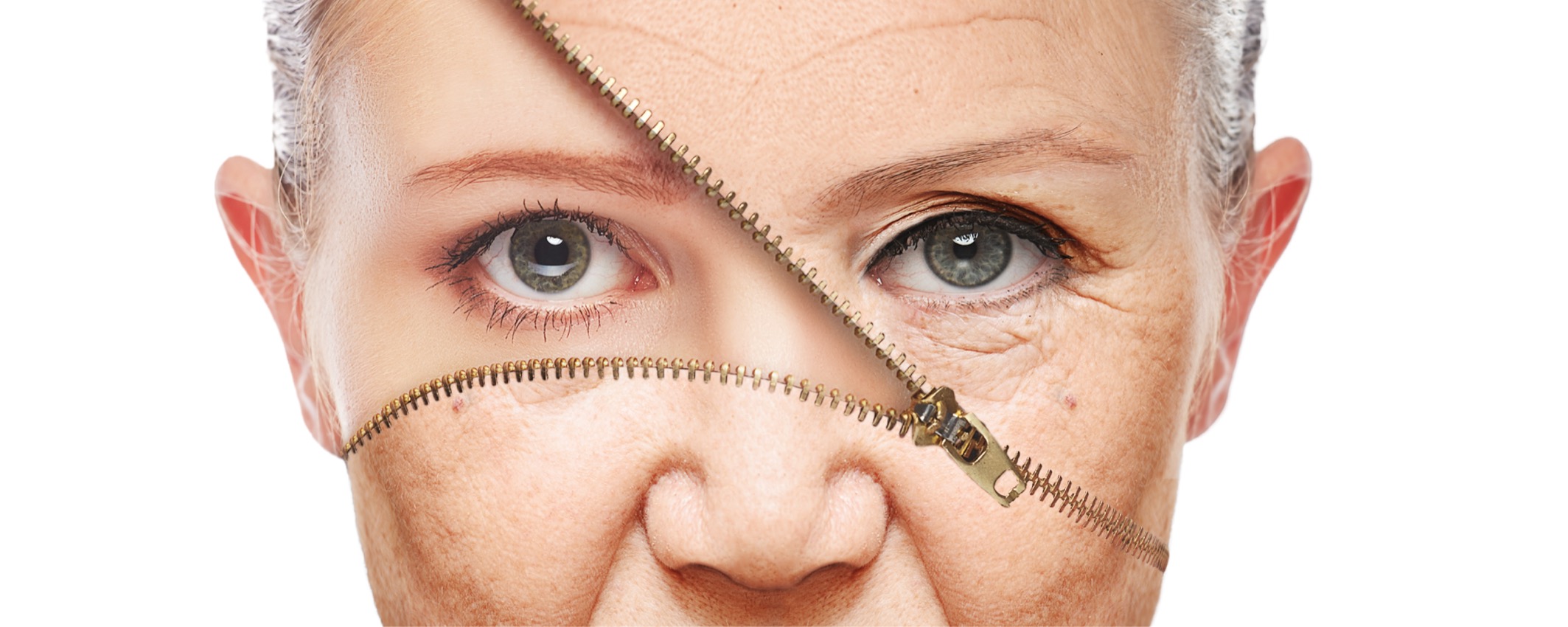
Have you heard of ‘longevity escape velocity’? Ray Kurzweil, a former Google engineer renowned for accurate tech predictions, forecasts that by 2030, medical technology will extend human life expectancy by one year for every year that passes. Simply put, if we live beyond 2030, death could become a thing of the past! The challenge then shifts from merely surviving to truly thriving. Can artificial intelligence help us achieve this?
Join us for an engaging exploration of the science and future of ageing! In this interactive course, ‘Hacking Ageing: Partnership of Human and Artificial Intelligence,’ we will examine essential questions about life: what it means to be alive, why we age, and crucially, how cutting-edge AI can help us improve our health and extend our lifespan. Through lectures, workshops, and tutorials, you’ll work with advanced AI health devices, analyse real data, and gain hands-on experience with neural networks, even with no prior experience.
While AI-driven healthspan products are rapidly advancing, do all people have equal access? Is the partnership between humans and AI in longevity benefiting only certain groups? By the end of the course, you’ll sharpen your critical thinking and problem-solving skills and be equipped to help shape the future of health, technology, and longevity.
Course Learning Outcomes
On completing the course, students will be able to:
- Articulate the concept of Artificial Intelligence (AI) and explain how it could potentially extend human lifespan and healthspan.
- Understand and value the connections between biological, psychological, and physical elements that influence aging, and implement a healthy lifestyle.
- Utilise AI applications and implement basic computer algorithms to promote a healthy lifestyle, while also considering the limitations of existing AI technology.
- Scrutinize the social and ethical consequences of AI-enabled lifespan elongation to cultivate critical thinking and ethical judgment abilities.
Offer Semester and Day of Teaching
Second semester (Wed)
Study Load
| Activities | Number of hours |
| Lectures | 24 |
| Tutorials | 6 |
| Workshop / Seminars | 6 |
| Reading / Self-study | 40 |
| Assessment: Assignments | 10 |
| Assessment: Group project (incl preparation, report writing and presentation) | 30 |
| Assessment: In-class quizzes | 2 |
| Assessment: Discussion, debate, presentation (incl preparation) |
4 |
| Total: | 122 |
Assessment: 100% coursework
| Assessment Tasks | Weighting |
| Tutorial participation | 20 |
| Quizzes | 20 |
| Worksheet | 10 |
| Group project and presentation | 30 |
| Comic strip | 20 |
Required Reading
- Alowais, S. A., Alghamdi, S. S., Alsuhebany, N., et al. (2023). Revolutionizing healthcare: the role of artificial intelligence in clinical practice. BMC Med Educ, 23, 689. From https://doi.org/10.1186/s12909-023-04698-z
- DW Documentary. (2021, May 28). More life – Decoding the secret of aging I DW Documentary. From https://www.youtube.com/watch?v=y-5VLHcTDSQ [Video]
- Federico, C. A, & Trotsyuk, A. A. (2024). Biomedical Data Science, Artificial Intelligence, and Ethics: Navigating Challenges in the Face of Explosive Growth. Annual review of biomedical data science, 7(1), 1-14. From https://doi.org/10.1146/annurev-biodatasci-102623-104553
- Gómez-Márquez, J. (2021). What is life?. Molecular biology reports, 48(8), 6223–6230. From https://doi.org/10.1007/s11033-021-06594-5
- Hayflick, L. (1998). How and why we age. Experimental gerontology, 33(7-8), 639–653. From https://doi.org/10.1016/s0531-5565(98)00023-0
- IBM. (n.d.). What is Artificial Intelligence? From https://www.ibm.com/topics/artificial-intelligence
- Marino, N., Putignano, G., Cappilli, S., Chersoni, E., Santuccione, A., Calabrese, G., Bischof, E., Vanhaelen, Q., Zhavoronkov, A., Scarano, B., Mazzotta, A. D., & Santus, E. (2023). Towards AI-driven longevity research: An overview. Frontiers in aging, 4, 1057204. From https://doi.org/10.3389/fragi.2023.1057204
- Miyazawa, T. (2023). Healthy Longevity and the Nutrition with AI Computing Technologies. Annals of nutrition and metabolism, 79, 29.
- Moskalev, A., Stambler, I., & Zhavoronkov, A. (Eds.). (2023). Artificial Intelligence for Healthy Longevity. Cham: Springer.
- Song, C. F., Tay, P. K. C., Gwee, X., et. al. (2023). Happy people live longer because they are healthy people. BMC Geriatr, 23, 440. From https://doi.org/10.1186/s12877-023-04030-w
Course Co-ordinator and Teacher(s)
| Course Co-ordinator | Contact |
| Dr B.B.H. Yuen School of Biomedical Sciences, LKS Faculty of Medicine |
Tel: 3917 9500 Email: yuenbbh@hku.hk |
| Teacher(s) | Contact |
| Dr B.B.H. Yuen School of Biomedical Sciences, LKS Faculty of Medicine |
Tel: 3917 9500 Email: yuenbbh@hku.hk |
| Professor D. Chan School of Biomedical Sciences, LKS Faculty of Medicine |
Tel: 3917 9482 Email: chand@hku.hk |
| Professor J.W.K. Ho School of Biomedical Sciences, LKS Faculty of Medicine |
Tel: 3917 9512 Email: jwkho@hku.hk |
| Dr O.M.Y. Ngan Medical Ethics and Humanities Unit, LKS Faculty of Medicine |
Tel: 3910 2771 Email: olivian1@hku.hk |