

Events Calendar

- This event has passed.
Seminar: What AI Can’t Compost: Plant Humanities in Transdisciplinary Pedagogy
5 May @ 1:00 pm - 1:30 pm
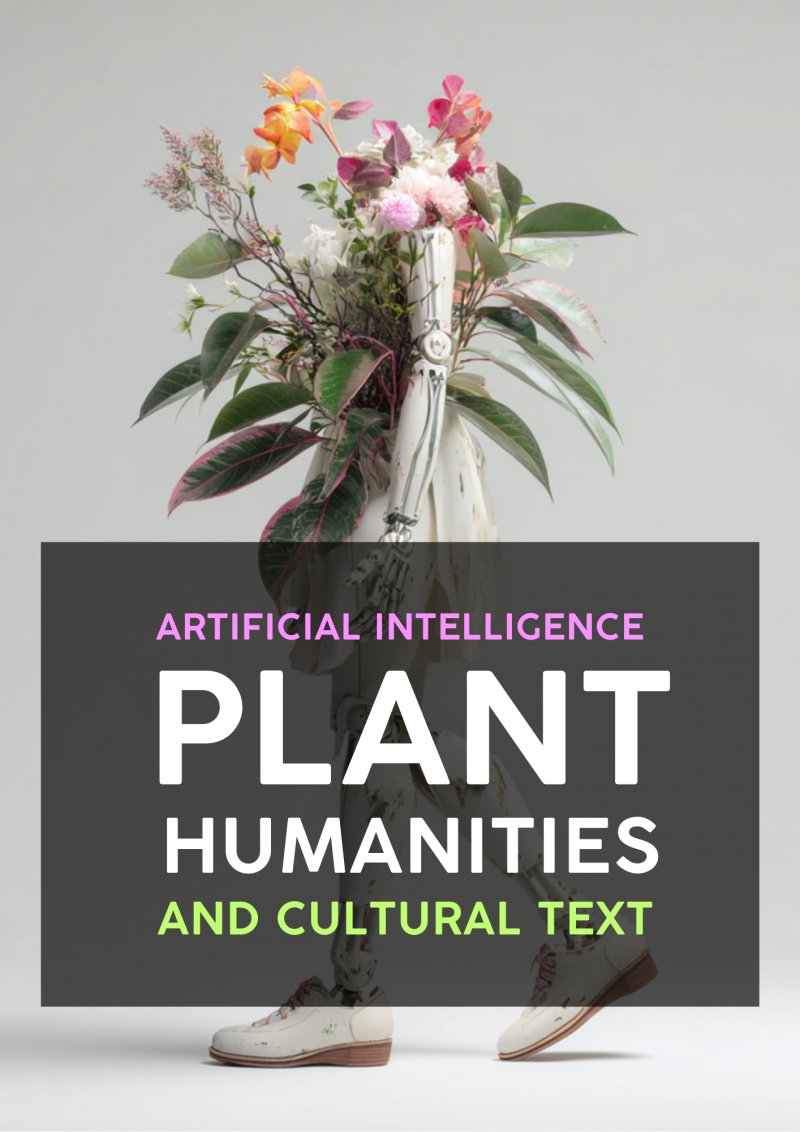
Plant humanities is an emerging transdisciplinary field established by the Dumbarton Oaks Plant Humanities Initiative, a Harvard-affiliated research programme that situates plants at the intersections of biology, history, literature, and cultural studies. This study reports on an experimental, cross-institutional undergraduate research project that brought together students from the University of Hong Kong and Transilvania University of Brașov (Romania) to explore plant humanities through artificial intelligence (AI) and comparative literary analysis. Nine mixed teams of Romanian philology and multidisciplinary Hong Kong students collaboratively designed and built speculative artistic prototypes — including interactive zines, gamified applications, installations, and AI-mediated epistolary exchanges — that investigated plants as agentic, culturally embedded, and temporally complex subjects.
Over five weeks, the project followed a scaffolded assignment sequence: concept development and research question formulation, prototype planning, and prototype construction. Formative feedback from instructors encouraged students to reflect on romanticised or anthropocentric framings of plant life, move from representational to provocative works, critically examine AI rather than treating it as a neutral tool, and engage seriously with source texts from the Chinese literary canon (including the Shi Jing, Dream of the Red Chamber, and Zhuangzi) and Romanian literary and folk traditions (including Miorița and Eminescu’s forest poetry).
Drawing on Barad’s (2007) agential realism, the pedagogy invited students to trace entanglements between plants, texts, technologies, and cultural contexts rather than resolve them into tidy conclusions. In a higher education landscape increasingly saturated by discourse around AI disruption, this project generated learning spaces that accommodated deliberate friction, ambiguity, and critical creative inquiry. Students confronted what AI flattens, distorts, or cannot access — from projecting personhood onto plants, to romanticising ecological violence, to dissolving culturally specific meaning into homogenised output. This fostered capacities for navigating supercomplexity: holding contradictions, connecting divergent knowledge systems, and making creative judgements under uncertainty — competencies increasingly vital for education futures (Barnett, 2004).
We argue that speculative and artistic research methods are productive approaches for enabling students to engage with complex theoretical frameworks, actualising concepts into digital and material artefacts, and thereby engaging students in knowledge production. Student reflections and focus group data indicated that the most transformative dimensions of the project were composing across disparate cultural, temporal, and material registers and the obligation to materialise ideas as art objects, suggesting that friction-centred, transdisciplinary design holds significant promise for AI-integrated pedagogy.
Join: https://hku.zoom.us/j/93530343949?pwd=pzT5vYlivhcCh6RUcJ2MZ4mA0ijdAx.1 (Meeting ID: 935 3034 3949/ Password: 807176)