


The Human Side of AI: Why Teamwork Matters More Than Tech Skills
Generative AI tools like GPT are transforming collaborative learning in universities, as demonstrated by an innovative hackathon event where Hong Kong students used AI to tackle pressing social challenges from education inequality to mental health support.
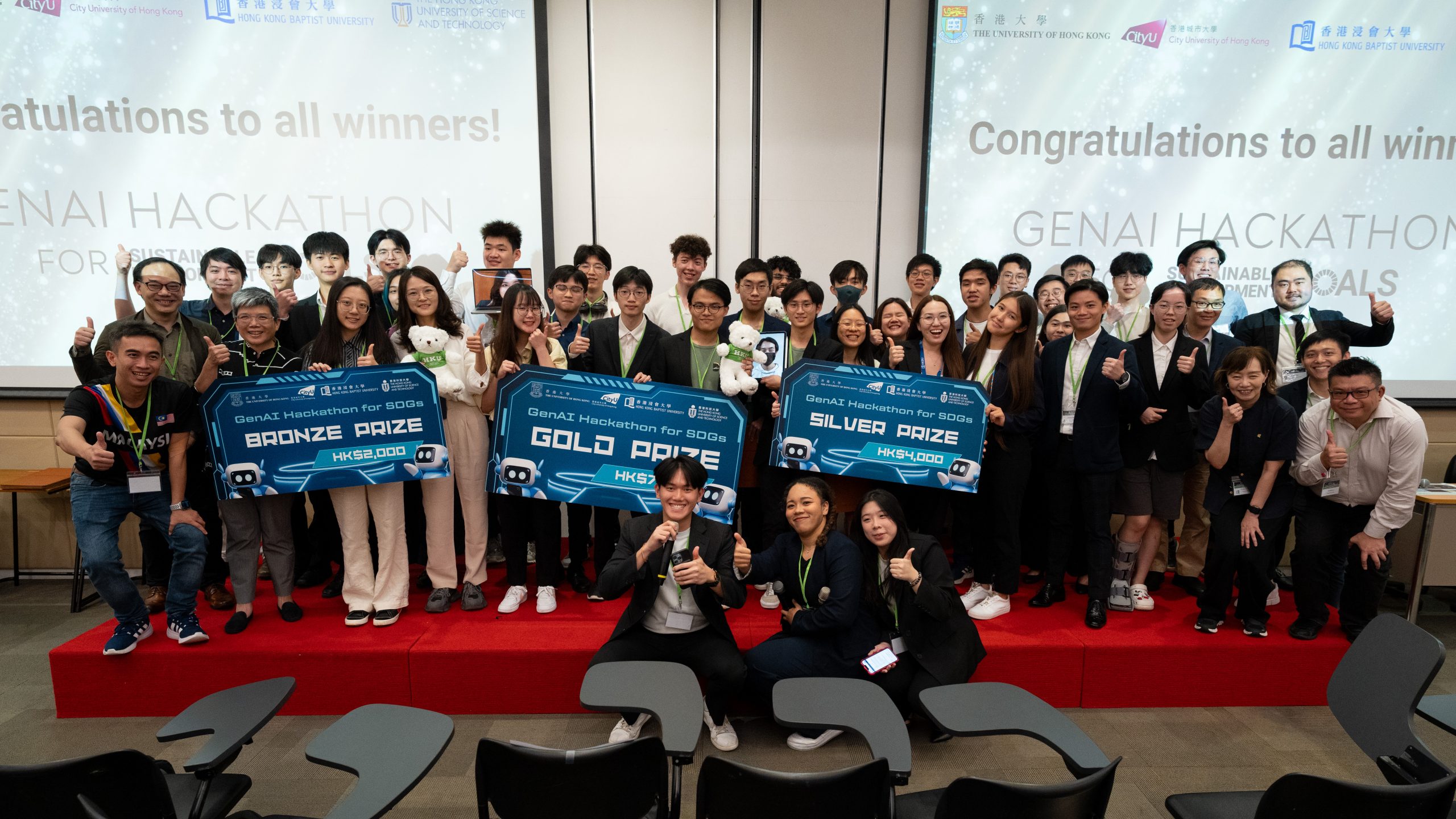
The four-week extended hackathon “GenAI Hackathon for Social Good” brought together undergraduate and postgraduate students from diverse disciplines – engineering, education, arts, business, and social sciences – to develop innovative solutions using AI tools, revealing surprising insights about what makes human-AI collaboration successful.
The most striking finding was that technical expertise didn’t guarantee success. Teams with the most diverse membership, including students from non-technical backgrounds, often outperformed those dominated by engineering students. Team composed almost entirely of engineers failed to win any awards despite their technical prowess, highlighting the importance of diverse perspectives in creative problem-solving for social challenges.
Students used GenAI in remarkably sophisticated ways throughout the hackathon – as brainstorming partners, coding tutors, debugging assistants, and even creative collaborators. Less technically experienced students particularly benefited, using LLMs to bridge knowledge gaps and develop working prototypes they couldn’t have built otherwise. The study found that GenAI use accounted for nearly half of all demonstrated digital competencies, fundamentally changing how students approach collaborative problem-solving. Rather than viewing AI as just a tool, many students described engaging with it as a negotiation process, working back-and-forth to achieve mutual understanding and refine their solutions.
Nancy Law, Nan Wang, Ming Ma, Zichun Liu, Chi-Un Lei Shihui Feng, Xiao Hu, Jack Tsao (2025) The role of generative artificial intelligence in collaborative problem solving of authentic challenges. The British Journal of Educational Technology. http://doi.org/10.1111/bjet.70010