

Teaching Support Resources
This is a collection of teaching resources for Common Core teachers, collected from our community of teachers and advisors. Teachers may want to refer to the guidance on GenAI use mentioned under Assessment and Feedback.
As the conditions and circumstances of every course are different, not everything here may be applicable. So please take what is useful for you. Any suggestions for improvement and sharing with us your best practices will strengthen the collective quality of teaching and uplift the student’s experience of trans- and interdisciplinary learning.
Framework for higher education teaching and Learning
University Educational Aims (UEAs) and Institutional Learning Outcomes for Undergraduate Curricula
Pursuit of academic/professional excellence, critical intellectual inquiry and life-long learning
Tackling novel situations and ill-defined problems
Critical self-reflection, greater understanding of others, and upholding personal and professional ethics
Intercultural communication, and global citizenship
Communication and collaboration
Leadership and advocacy for the improvement of the human condition
The above is articulated within the context of an enabling curriculum structure and an outcome-based approach to student learning (OBASL).
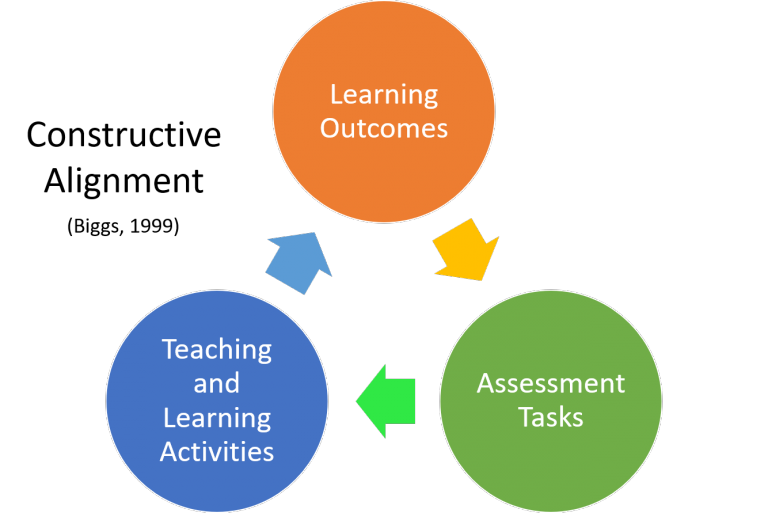
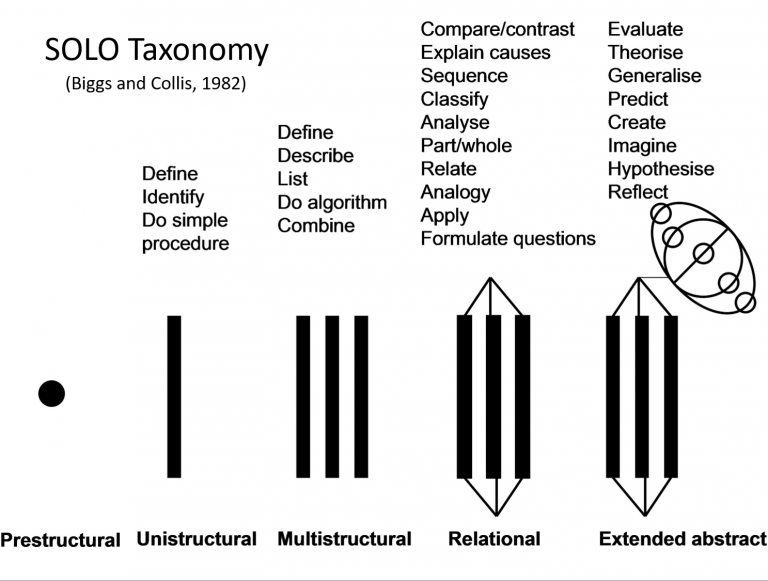
Two fundamental concepts for guiding teaching and learning in Higher Education are Constructive Alignment and SOLO Taxonomy.
COURSE APPROVAL AND administration
- Invitation Circular
- Course Proposal Template
- Word doc format
- PDF format
- [Proposals must be submitted online via the online submission system.]
- Access to Common Core Course Proposal Online Submission System
- Common Core Curriculum Committee Structure (August 10, 2026)
- Policy and Guidelines on Offering Common Core Courses (document 299/819 re-amended)
- Programme Learning Outcomes for the Common Core Curriculum
- Assessment Policy for the Common Core Curriculum (document 41/1225)
- Examination Procedures for the Common Core Curriculum (document 300/819 re-amended)
- Discontinuation of Common Core Courses with Low Enrollments (document 20/716)
Course syllabus and promotion
The template provides a foundational framework to ensure your course aligns with HKU’s outcomes-based approach to student learning (OBASL) and addresses important issues around academic integrity (for example, plagiarism).
Shared Common Core Syllabus Template Language
Teachers should also keep in mind how course learning outcomes feeds into the Common Core’s programme learning outcomes and HKU’s educational aims and institutional learning outcomes, ensuring an alignment between learning outcomes, teaching and learning activities, and assessments.
Courses should be kept updated to the interests and needs of students to sustain enrolments. Courses not meeting minimum enrolment numbers may be cancelled.
Course Trailers: With the assistance of TALIC, we can help teachers and tutors with the design and produce a short trailer video for your course. Course trailers are posted visibly on the Common Core website here and boosts your course enrolment numbers. Contact us to arrange to create a trailer for your course.
Updating your Course: Coordinators should constantly renew the content, learning activities, and assessments to make it engaging and relevant to students’ future professional and personal lives. Asking for students’ feedback and recommendations is a valuable process for continuous improvement. Ideas for course enhancement may also come through sharing best practices with peers or consulting with TALIC or CiC.
Communication-Intensive badged courses are courses that consist of a syllabus with components that explicitly develop communication-related knowledge, skills and attributes, an educational aim of the university and supports the building of student future readiness. Students that have completed CiC-badged courses will have the C-I course badge visible on their transcripts, also known as Academic Attainment Profile (AAP).
In line with the HKU’s T&L strategy, teachers should strongly consider CiC badging of their courses. For more information on C-I badging, visit the CiC website or contact Michelle Raquel.
Integrating the United Nations Sustainable Development Goals (UN SDG) into your course and teaching them to your students can help to connect course content more tangibly to real world challenges. This can empower students to become advocates of a more sustainable future and step up as global actors. Common Core also has funding through the Leadership and Impact Awards of up to $5,000 per student to support students-led or initiated project with real impact.
You can badge your course as a UN SDG course through the Student Information System (SIS) and by emailing the Common Core Office.
Teaching Your Course
Teaching in higher education is urgently moving towards active learning approaches given the various disruptions from the competition from non-traditional educational providers, commoditisation of content, and advancement in digital technologies, especially artificial intelligence. Overwhelmingly, students tell us that traditional lecturing (sage on stage) and students passively listening to teachers speak is no longer acceptable.
Common Core strongly encourages teachers to adopt flipped classroom approaches for both large and small classroom environments and integrate learning activities for students to exercise collaboration, creativity, critical thinking, and multimodal communication skills (written, oral, visual, digital). Teaching should be a two-way conversation between teachers and students.
As inter- and transdisciplinary courses, teachers should:
- Make explicit points of contact with different disciplines.
- Build clear pathways—intellectual and social—between the class, the university, the city, & the world.
- What will be newly discovered in each class? How will the students claim this knowledge and transport it toward the next stage or into other contexts?
- Organise off-campus fieldwork, labs, studios, ethnographies, photo trips with drawing, photography, writing as forms of reflection
- Decide what classroom policies and uses of e-devices serve your students’ learning and support the best teaching atmosphere
- Increase the use of digital activity for learning in your class: For example, Mentimeter, Padlet, Kahoot, Miro, multimodal generative AI applications
- Work with students to help them create lively and effective presentations and styles of communication.
Resources for Online Teaching
- Active Learning in Hybrid and Physically Distanced Classrooms by Vanderbilt University
- Hybrid-Flexible Course Design (2019) by B.J. Beatty
- Monash University’s Hybrid Teaching Models
- Great Teaching Toolkits by Cambridge Assessment International Education (applies to both online and hybrid teaching)
- Use of the Seven Principles of Effective Teaching to Design and Deliver an Interactive Hybrid Nursing Research Course
- The Jigsaw Classroom
- Effective Teaching Methods for Large Classes, by J.M. Carpenter
- Three Keys to Using Learning Groups, by L. Michaelsen
- What is TBL and Why Does it Work? by J. Sibley and S. Spiridonoff
- The Essential Elements of Team-Based Learning, by L. Michaelsen, M. Sweet and D. Parmalee
- Team Based Learning Academe Article, by L. Michaelsen and M. Sweet
- A Model for Teaching Large Classes: Facilitating a “Small Class Feel”, by Rosealie P. Lynch and Eric Pappas
HKU is moving away from teacher-centred lecture styles of teaching towards more interactive delivery methods. You may want to consider implementing Flipped Classroom in your courses.
Student-as-Partners is an important focus at HKU and a trend in higher education. Teacher can include students in the design of assessments and learning experiences as a way to increase engagement.
- TALIC: Student-as-Partners seminar series
- TALIC Seminar: Partnerships in Transdisciplinary Third Space (5 Nov 2021)
Presented by Dr. Giedre Kligyte, University of Technology Sydney - 15 case studies of partnership work generated from the 2020 Students as Partners Roundtable at Deakin University
- Guidelines on Use of Inclusive Language in Student Work
- Resources on Feminist Pedagogies
- Powerpoint Presentation on “The Need for Inclusive Collaboration across Cultures in Group Work”
- Meaningful Intercultural Interactions in University Classrooms: A Guidebook for Teachers, compiled by T. Zou and J. Yu
Improvisation and design thinking are increasingly integrated approaches in university teaching and learning due to their potential to foster students’ creativity, adaptability, and problem-solving skills. While both methodologies seem very different, many of the techniques and desired outcomes overlap and complement well with each other. Improvisation focuses on responding to unpredictable circumstances by embracing adaptability and innovative thinking. Design Thinking principles empowers students to approach challenges with a solutions-oriented mindset, emphasising empathy with students, collaborative ideation, and a willingness to iterate and improvement.
Here’s a guidebook by Dr Jack Tsao and Ms Tanya Kempston (Faculty of Education) exploring how teachers can adopt these methodologies into their teaching repertoires: Guidebook on Improvisation through Design Thinking
Gamification and game-based learning, while often used interchangeably, represent distinct approaches to the integration of gaming elements in education, particularly in higher education settings.
Gamification refers to the technique of applying game-like elements to non-game contexts, such as education. Common approaches in gamification includes leveraging elements like point scoring, competition, and leaderboards to incentivise behaviours to enhance student engagement and motivation. Gamification transforms a typical learning experience by integrating competition, cooperation, exploration, and storytelling, making it a dynamic and socially engaging process.
Game-based Learning (GBL), on the other hand, involves the use of actual games designed for the specific purpose of learning. These games are not just about adding game elements to the learning environment but are structured around the game itself. The content is embedded within the gameplay, meaning that students learn by playing a game specifically designed to teach particular concepts or skills. This approach is deeply rooted in experiential learning, where students learn through experience and reflection on doing, which can be more effective for certain subjects or competencies. Storytelling is closely associated with game-based learning although these methodologies may be used separately in the classroom.
For more information, here’s a guidebook for teachers by Dr Jack Tsao on play games, and storytelling for teaching and learning: Guidebook on Game-based Learning and Storytelling
Examples gamification and game-based learning within Common Core courses
CCST9003 Everyday Computing and the Internet
CCST9068 Artificial Intelligence: Utopia or Dystopia?
Assessment and Feedback
Assessments at the Common Core play a crucial role in measuring learning outcomes and ensuring that students achieve key competencies required for the curriculum and embodied in the University Educational Aims. Assessments must align with the learning objectives and emphasise fairness, validity, and reliability, incorporating a variety of methods for ongoing feedback, evaluating cumulative knowledge, and the application of skills.
Feedback on assessment provide students a sense of their learning progress and enable them to improve for future tasks. Teachers should use well-defined and easy-to-understand rubrics to ensures transparency and consistent. This helps students understand exactly what is expected of them and how they can achieve better results.
- Give early and regular feedback
- Build-in simple and quick practices, assessed and otherwise, to keep students interacting (including after Reading Week)
- Creating and assessing group projects: clear expectations, assignments, feedback, timelines; individual and group aspects. Consider forming intercultural, interdisciplinary, intergender, inter-year groups.
- Clarity of assignments and expectations (and change them up, year to year, which also helps avoid plagiarism)
- Reinforce the university’s policy on academic honesty and plagiarism, especially to first year students.
Here is non-comprehensive list of assessment methods you may consider:
- App or game development
- Art installations or theatrical performances
- Case studies and scenario development
- Debate
- Demonstrations
- E-Portfolio
- Essays and reports
- Experiential project with a community or corporate partner
- Field trip analysis
- Geocaching, geolocation, and analysis
- In-class exams (including quiz and Multiple Choice Questions (MCQs))
- In-class presentation, participation, and response
- Interviews and ethnographies
- Journals and reflective writing
- Lab or studio experiment
- Literature review
- Mapping (using a variety of methods)
- Museum interactions
- Oral defense
- Photo and video journals
- Podcasting (including live interviews)
- Posters (Scientific, artistic, etc)
- Problem Based Learning scenarios
- Public exhibition or dissemination event
- Role plays
- Soundscapes and audio analysis
Teachers should be aware of the impact of GenAI on some of these modes of assessment.
For more information on assessment methods, check out TALIC’s Assessment Resources @ HKU Page. Alternatively, if your course is badged Communication-Intensive (CI) or you are considering CI-badging, the Communication-Intensive Courses team can provide one-on-one support for assessment (re)design. More information here.
Sample Grade Descriptors for Essays
Sample Grade Descriptors for Presentations
Sample Grade Descriptors for Tutorial Participation
Sample Grade Descriptors for Reflective Writing
The sample rubrics should be revised and customised to the course tasks or assignments. Teachers should assist students in understanding the contents of the rubric. If you need assistance with rubrics, please contact the Communication-Intensive Course (CiC) project coordinator Michelle Raquel for further assistance.
Policy on Use of Generative Artificial Intelligence for Teaching and Learning
Under the HKU’s Generative AI policy, teachers are encouraged to optimise student learning with GenAI, including devising creative, engaging and innovative T&L activities; fostering analytical thinking; developing critical research skills; creating content tailored to individual needs and interests, etc. Teachers should also anticipate students’ use of GenAI and devise mechanisms for evaluating student attainment authentically and fairly. The aim is to ensure the responsible and effective use of GenAI tools and to uphold the highest standard of academic integrity.
Strategies for addressing AI Use in course assessments
To address the challenges posed by GenAI on student work assessments, teachers may consider the following:
- Communicate expectations on what constitutes acceptable use via Moodle LMS, in the syllabus, or assignment task instructions.
- Offer guidance on proper declaration and citation of GenAI tools used in coursework tasks and assignments.
- Include AI usage declarations forms, reflection statements for AI-use, asking students to keep a log or evidence of their work processes, or oral defence and interviews accompanying written works.
- Formative components for assessments that evidence the process and iterations (drafts, peer reviews, in-class components)
- Alternative assessment methods that evaluate students’ competencies (instead of GenAI tools). Examples include invigilated device-free examinations, live assessments such as demonstrations and oral presentations, multimodal assessments (building games, applications, databases), and authentic assessments based on fieldwork and problem-solving in the real world.
- Rubrics or grading criteria that evaluate substance (e.g. specificity and depth in the application of knowledge) rather than form (e.g. how the assessment is written or structured).
While all teachers have access to Turnitin through Moodle LMS to detect AI-written work, this detection score is unreliable and can be easily circumvented. Teachers must NOT rely on Turnitin alone to determine students’ AI use in assessments.
If teachers suspect students have submitted AI-generated work outside of the permitted use case (as communicated by teachers), teachers may consider talking to the students first regarding their concerns (which could then necessitate further action, such as an interview or oral defence).
- Classroom Assessment Techniques (CATs), by Center for Teaching, Vanderbilt University
- Daydreaming or Deep in Thought? Using Formative Assessment to Evaluate Student Participation, from Faculty Focus
- Wise Assessment Forum, Centre for the Enhancement of Teaching and Learning
Innovative assessment ideas:
Supporting Student Learning through Feedback and Assessment Series by e-Learning Pedagogical Support Unit: A series of videos highlighting how technology can be used to help facilitate the feedback process
Beyond the Course
To support further learning beyond the curriculum, students and teachers may apply for the following funding:
Teachers and students
Transdisciplinary Experiential Learning Fund: Exclusively for experiential learning activities or projects that are based in Hong Kong, mainland China, or overseas that are interdisciplinary or connect to a UN Sustainable Development Goal. Students and teachers
Students only
Global Engagement Award: For travel outside of Hong Kong to further learning related to a Common Core course. These can be for fieldtrips, university visits (except formal exchange study purposes), experiential learning activities, conferences/ symposiums, competitions, and other impactful Mainland and international events. Applications require endorsement by the CC course coordinator.
Leadership and Impact Award: For student-led or initiated projects and activities that have an impact. Examples: Collaborative research projects with academic units/departments, organisations or communities; Student-organised academic events and knowledge-sharing forums; Community partnerships activities or events; Innovation challenges and hackathons; Advocacy campaigns and workshops; Other student-organised activities that demonstrate leadership and impact.
Learning activities beyond the curriculum (i.e. not currently attached to an existing credit-bearing course) may be eligible for non-graduating credit; which means they can appear on the students’ Academic Attainment Profile (AAP) or transcript.
These out-of-classroom learning experiences must connect the achievement of University Educational Aims and may qualify for one (1) or two (2) credits.
Credits can be accumulated one at a time, but students are only able to claim actual transcriptable credits in blocks of three (as no course should have a credit value of less than three credits under the University’s undergraduate curriculum structure).
The following information will be presented in the transcripts:
| Name of Activity / Experience | Period | Location | Credits |
Applications may be submitted by teachers or students through Horizon’s Office.
For more information, check out the Recognition of Out-of-classroom Learning Experiences – Credit Award Scheme page.
Plagiarism and Disciplinary Options
What is plagiarism? (A useful resources to share with students)
Teachers should exercise vigilance to ensure that all assessments submitted by students are their own independent work.
Turnitin@HKU (via the Moodle LMS) offers Similarity Check on students’ work for proper citation or potential plagiarism. Once a paper is submitted to Turnitin, it will compare with documents in a continuously updated database consisting of current and archived web pages, millions of student papers worldwide, and collections of newspapers, magazines, scholarly journals, e-Books and e-Texts.
AI writing detection is also available via Turnitin Feedback Studio (both via turnitin.com and Moodle). Since the tool has limitations in terms of generating false positive, teachers are advised to use it as a reference tool only but not as direct evidence of academic misconduct.
If suspected cases of plagiarism are discovered during the semester, please report them to the CC Office immediately with details of each case (e.g. weighting and details of the assessment task concerned, copy of the plagiarized work, turn-it-in report, notes of meeting with the student, etc.). If necessary, arrangements will be made for the CC Director to meet with the student(s) concerned to help ascertain what steps to take as a follow-up (including seeking recommendation from the Committee of Internal Examiners for the CC Curriculum about a course of action).
As a uniform treatment for all Common Core courses, when plagiarism is confirmed, zero marks should be given for the assessment component concerned, and in addition a full letter grade for the course taken down (e.g. from “A-” to “B-”, from “B+” to “C+”) regardless of the percentage the assessment component accounts for.
HKU Statutes Under the provisions of Statute XXXI 2(1)(g), 2(2) and 2(3), any complaint against a student in connection with examinations (which include sit-down, written examination as well as other forms of assessment, such as thesis examination) must be submitted to the Registrar within one month of the time when the matter of such complaint arose.
Regulations Governing Students’ Academic Conduct Concerning Assessment
Policy on Student Plagiarism in Undergraduate and Taught Postgraduate Curricula
Professional Development
TALIC faciliates various seminars and workshops to promote professional teaching development and to encourage scholarship of teaching and learning. Check out their schedule for upcoming seminars and workshops.
TALIC’s Community of Practice A rich repository of teaching-related materials, including an online publication Teaching and Learning Connections and a Wise Assessment forum, which contains guides and case studies on different assessment techniques.
The Professional Certificate in Teaching and Learning in Higher Education (PCTLHE) course is organised by the TALIC. The programme provides the framework and evidence-based literature for developing into an effective teacher. The course is available for all non-postgraduate teaching staff teaching in Common Core courses.
Research postgraduates teaching in the Common Core should take the Certificate in Teaching and Learning in Higher Education.
Teachers, tutors, and teaching assistants of the Common Core may apply for Advance HE Fellowship through TALIC as official recognition of your teaching. Fellowship is regarded internationally in many places as a teaching qualification in the tertiary sector. Application is free for Associate Fellowship, Fellowship, and Senior Fellowship.
TALIC’s Postgraduate Certificate in Academic Practice (PCAP) equips new academic and teaching staff with essential knowledge and practical skills in teaching in Higher Education. The programme is fully-funded by the University and professionally taught by experienced staff from TALIC. Graduates are automatically granted HE Advance Fellowship status.
In partnership with Faculty members across HKU, the Common Core offers a range of different workshops to upskill our tutors and teaching assistants, given they represent one of the most important touchpoint with our students. These sessions aim to develop skills in lesson planning, facilitation and delivery, creating assessments, giving feedback, and design thinking and improvisation in teaching and learning.
Sharing Students' Works
Common Core hosts the HKU Student Learning Festival, an annual event that showcases the achievements of students throughout the entire academic year for Common Core and other courses.
The event is held each year on the last week of teaching in Semester 2. Please email commoncore@hku.hk if you are interested in participating.
Display your students’ artwork in the Main Building hallway or in the Common Core Lounge.
- Unforeseen Circumstances: An online peer-reviewed multimedia journal and exhibit space for CC undergraduates, recent HKU graduates, and peer-collaborators external to HKU.
- I-Squared: Interdisciplinarity and Impact Student Showcase and Networking Event: Run in conjunction with the Bachelor of Arts and Science (BASc) programme, the event showcases students’ interdisciplinary projects undertaken by students through the Common Core Transdisciplinary Undergraduate Research Initiative and the BASC programme to the broader university community. In addition to the project exhibitions, the event includes live presentations, discussion panels, and interactive sessions.
Diversity and Inclusivity
The University’s Policy on Equal Opportunity prohibits sexual, disability, racial and sexual orientation harassment, and discrimination on the grounds of sex, marital status, pregnancy, disability, family status, and race.
Other
All Common Core courses, teachers, and tutors are evaluated by students each semester. The evaluation is important for improving the students’ experience of a course and the effectiveness of teaching, as well as playing a key part in staff performance review for HR events such contract renewal, tenure, and promotion.
Results are treated confidentially and feedback by students are anonymous.
The SFTL is administered by the Teaching and Learning Evaluation and Measurement Unit (T&L EMU).
For more information, check out the following:
Intellectual Property Rights Policy of HKU (for HKU Staff, Students and Visitors)
Intellectual Property Rights: To Protect Educational Materials
ITS’ HKU Statement of Ethics on Information Technology (IT) Use
Copyright in Teaching and Learning at HKU, HKU Libraries
The Copyright Classroom: A series of educational animation videos explaining how the Copyright Ordinance (Cap 528) applies to teaching and learning and beyond.
The NEXUS Online repository gathers a diverse range of resources that can assist teachers in guiding students through their trans-, cross-, and inter-disciplinary learning journeys. Learning resources range from videos, presentations, audio, photos, writings, surveys, and other items compiled and shared by Common Core teachers and students. These aim to provide teachers, instructors, mentors and TAs useful resources to support instructional design, and their teaching and learning goals.
Questions or Need Assistance?
If you have any questions, suggestions, or concerns, do not hesitate to contact Dr Jack Tsao or Professor Julian Tanner.